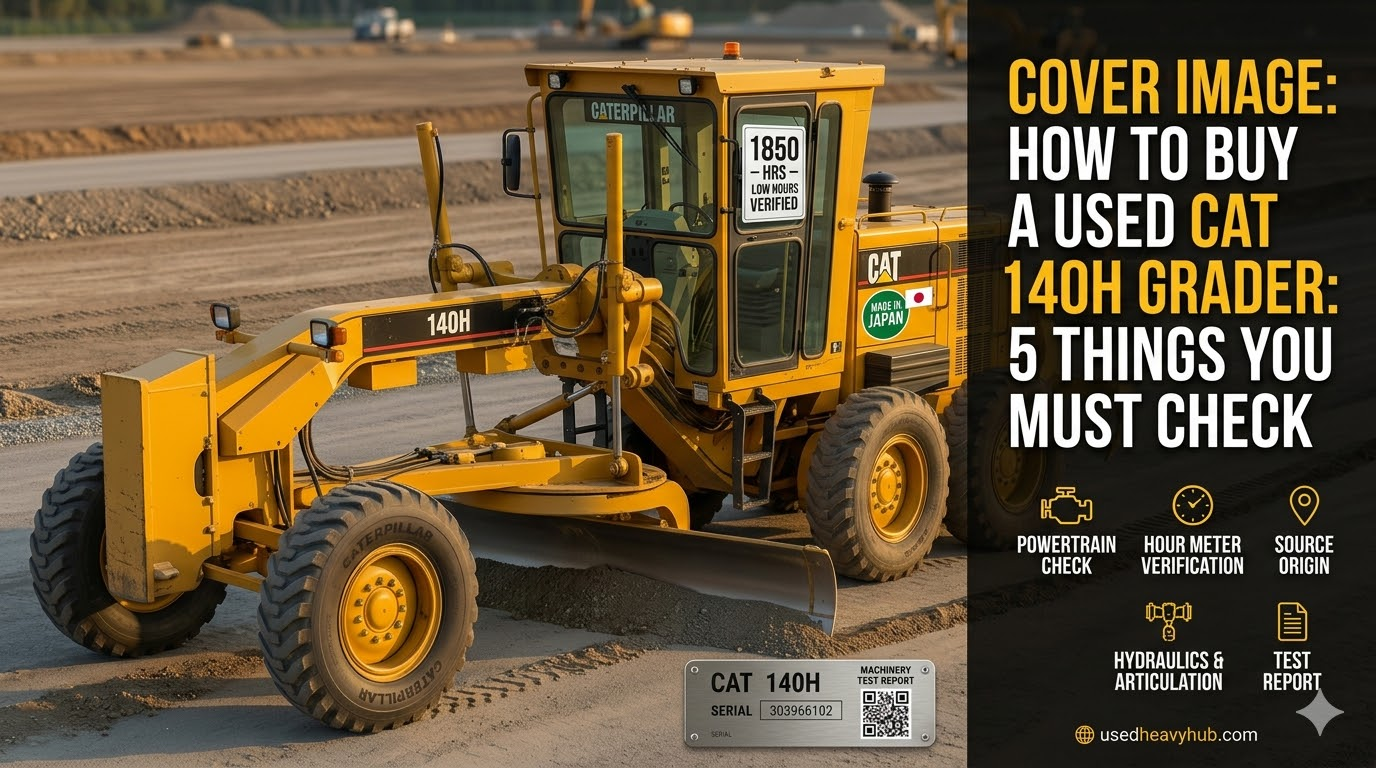
How to Buy a Used CAT 140H Grader: 5 Things You Must Check
Release time: 2026-03-03
Investing in heavy machinery is a major financial decision. For contractors handling complex earthmoving tasks, equipment reliability is simply non-negotiable.
When grading rough terrain, any downtime translates directly to lost revenue. If you are evaluating a Used CAT 140H Motor Grader, you are looking at an industry legend known for its durability.
However, buying used requires due diligence. Here is your essential guide on exactly what to inspect before making your purchase.
What is the True Condition of the Powertrain and Engine?
The heart of any heavy-duty grader is its engine. While many graders rely on standard factory setups, specific configurations, such as those equipped with a robust Cummins engine, offer distinct advantages in torque and fuel efficiency. When inspecting the powertrain, you must look beyond the surface.
Cold Start Test: Always request a cold start video or perform one if inspecting in person. Watch for excessive white or blue smoke, which can indicate injector issues or burning oil.
Blowby Inspection: Check the crankcase breather tube. Excessive blowby gas is a clear indicator of worn piston rings or cylinder liners.
Transmission Shifts: The CAT 140H utilizes a direct-drive power shift transmission. Ensure that shifts between gears are crisp and do not slip under a load.
Why are Verified Operating Hours So Critical?
In the world of road construction equipment, the hour meter is your most important metric. However, hour meters can be replaced or tampered with, so verifying the hours against the machine’s overall wear is crucial.
The 2000-Hour Benchmark: Finding a machine with extremely low hours—such as the 0-2000 working hours range—is rare and highly valuable. At under 2000 hours, major components like the engine, transmission, and hydraulic pumps have barely been broken in.
Visual Consistency: Correlate the hour meter with pedal wear, seat condition, and the state of the original paint. A genuine low-hour machine will typically retain its original color and show minimal cab fatigue.
Maintenance Savings: Purchasing a machine with verified low hours drastically reduces your initial maintenance overhead, allowing you to deploy the equipment straight to the job site.
Where Was the Machine Originally Sourced and Maintained?
The geographical origin of a used machine tells a story about how it was treated. Machines sourced from regions with strict environmental and maintenance regulations tend to be in far better condition than those from less regulated markets.
The Japanese Advantage: A used motor grader Japan origin is highly sought after globally. Japanese contractors are legally bound to strict maintenance schedules and emission regulations.
OEM Parts: Machines maintained in Japan almost exclusively use Original Equipment Manufacturer (OEM) parts rather than aftermarket substitutes, ensuring the longevity of core components like bearings and pressure vessels.
Structural Integrity: Look for a machine that hasn’t been subjected to extreme, corrosive environments. Original Japanese units usually feature intact frames without deep structural rust or poorly welded stress cracks.
How Healthy is the Hydraulic System and Articulation Joint?
A motor grader’s precision relies entirely on its hydraulics and articulation. If the hydraulics are weak or leaking, the machine cannot maintain a level grade, rendering it useless for finish work.
Cylinder and Pump Inspection: Inspect all lift, shift, and tilt cylinders for weeping fluid or scored chrome rods. The main hydraulic pump must operate quietly without whining under load.
Circle and Moldboard: The circle drive is the most critical grading component. Check the pinion gear and circle teeth for excessive wear. A tight circle means precise grading.
Articulation Hitch: The center articulation joint allows the grader to maneuver in tight spaces. Ask the operator to articulate the machine fully left and right. Any clunking sounds or visible play in the joint pins means expensive line-boring work is needed.
Who Provides the Machinery Test Report and Warranty?
Never buy a piece of heavy equipment blind. Even if the price seems unbeatable, hidden mechanical failures will quickly turn a bargain into a massive liability. Transparency from the supplier is your ultimate safety net.
Comprehensive Testing: Always demand a detailed Machinery Test Report. This document should verify the functionality of the PLC, engine, pump, and electrical systems.
Pricing Context: Understand the market value. At a highly competitive FOB price of $23,000, a second-hand Caterpillar 140H offering 14,000kg of operating weight and low hours represents an incredible ROI—provided the condition is verified.
Supplier Credibility: Ensure the supplier has a proven track record of exporting heavy machinery, offers clear video outgoing-inspections (or transparently notes when they rely strictly on certified test reports), and can guarantee delivery within a reasonable 7-30 day window.